IT´S FREE AND WITHOUT OBLIGATION! You have nothing to lose and everything to gain! There is NEVER any obligation whatsoever and NO CREDIT CARD REQUIRED.
FULL ACCESS TO WOMEN´S PROFILES AND FEATURES! You´ll have full FREE access to all of the women´s profile information including all available photos and other enhanced features to assist you in exploring your opportunities.
START RECEIVING LETTERS FROM WOMEN! Our real, live, local Matchmakers go to work for you immediately – at NO COST - matching your profile to potential women in their city or region! Most men begin receiving letters from qualified women within a day or two – sometimes even just hours.
OPPORTUNITY TO VIEW WOMEN´S VIDEOS! You´ll have the opportunity to view the women´s profile videos (if available) produced by our local staff and found exclusively here!
YOU ARE IN CONTROL! YOU are in control. YOU choose who, how and IF you want to communicate with a woman. NEVER any obligation!
CUSTOMER SERVICE THAT IS UNMATCHED Questions? Concerns? We invite you to call us or otherwise contact us anytime! Our contact information is at the bottom of nearly every page.
Set Up Your Account Here
Is there any REAL reason to wait? It's FREE, instant and without
obligation to register NOW!
It’s the first step in possibly the most rewarding romantic adventure of your lifetime!
The first settlers reached Peru some 20,000 years ago. They brought stone tools and were hunter-gatherers, living
off game and fruit. Some of them settled in Pacaicasa, Ayacucho. The most ancient Peruvian skeletal remains found
to
date (7000 BC) show the ancient settlers had broad faces, pointed heads and stood 1.60 meters tall. The early
Peruvians left examples of cave paintings at Toquepala (Tacna, 7600 BC) and houses in Chilca (Lima, 5800 BC). This
marked the emergence of the history of Peru.
The process of domesticating plants was to lay the foundations for organized agriculture and the construction of
villages and ceremonial sites. As the regional cultures gradually integrated, new techniques surfaced such as
textile weaving, metallurgy and jewelsmith, giving rise to advanced cultures.
THE PRE INCAS CULTURES
The history about Peru was based on the civilizations and cultures thousand years ago. Here’s to know why:
Over the course of 1400 years, pre-Inca cultures settled along the Peruvian coast and highlands. The power and
influence of some civilizations was to hold sway over large swaths of territory, which during their decline, gave
way to minor regional centers. Many of them stood out for their ritual pottery, their ability to adapt and superb
management of their natural resources; a vast knowledge from which later the Inca Empire was to draw.
Explore the profound history of Peru.
The first Peruvian civilization settled in Huantar (Ancash) in around 1000 BC. The power of the civilization,
based
on a theocracy, was centered in the Chavin de Huantar, temple, whose walls and galleries were filled with
sculptures
of ferocious deities with feline features.
The Paracas culture (700 BC) rose to power along the south coast, and was to craft superb skills in textile
weaving.
The north coast was dominated by the Moche civilization (100 AD). The culture was led by military authorities in
the coastal valleys, such as the Lord of Sipan. The Moche pots which featured portraits and their iconography in
general were surprisingly detailed and showed great skill in design.
The highlands saw the rise of the Tiahuanaco culture (200 AD) based in the Collao region (which covered parts of
modern-day Bolivia and Chile). The Tiahuanaco was to bequeath a legacy of agricultural terracing and the
management
of a variety of ecological zones.
The Nazca culture (300 AD) was able to tame the coastal desert by bringing water through underground aqueducts.
They carved out vast geometric and animal figures on the desert floor, a series of symbols believed to form part
of
an agricultural calendar which even today baffles researchers.
Know the profound history of Peru.
The Wari culture (600 AD) introduced urban settlements in the Ayacucho area and expanded its influence across the
Andes.
The refined Chimu culture (700 AD) crafted gold and other metals into relics and built the mud-brick citadel of
Chan Chan, near the northern coastal city of Trujillo.
The Chachapoyas culture (800 AD) made the best possible use of arable land and built their constructions on top
of
the highest mountains in the northern cloud forest. The vast Kuelap fortress is a fine example of how they adapted
to their environment.
THE INCAS
The Inca Empire (1500 AD) was possibly the most organized civilization in South America. Their economic system,
distribution of wealth, artistic manifestations and architecture impressed the first of the Spanish chroniclers.
The Incas worshipped the earth goddess Pachamama and the sun god, the Inti. The Inca sovereign, lord of the
Tahuantinsuyo, the Inca Empire, was held to be sacred and to be the descendant of the sun god. Thus, the legend of
the origin of the Incas tells how the sun god sent his children Manco Capac and Mama Ocllo (and in another version
the four Ayar brothers and their wives) to found Cuzco, the sacred city and capital of the Inca empire.
Inca Empire, one of the greatest in the history of Peru.
The rapid expansion of the Inca Empire stemmed from their extraordinary organizational skills. Communities were
grouped, both as families and territorially, around the ayllu, their corner of the empire, and even if villagers
had
to move away for work reasons, they did not lose their bond to the ayllu. The Inca moved around large populations,
either as a reward or punishment, and thus consolidated the expansion while drawing heavily from the knowledge of
the cultures that had flourished prior to the Incas.
The Inca's clan was the panaca, made up of relatives and descendants, except for the one who was the Inca's
successor, who would then form his own panaca. Sixteenth-century Spanish chroniclers recorded a dynasty of 13
rulers, running from the legendary Manco Capac down to the controversial Atahualpa, who was to suffer death at the
hands of the Spanish conquerors.
The Tahuantinsuyo expanded to cover part of what is modern-day Colombia to the north, Chile and Argentina to the
south and all of Ecuador and Bolivia.
The members of the panaca clans were Inca nobles, headed by the Inca sovereign. The power of the clans and the
Inca
was tangible in every corner of the empire, but the might of the Incas reached its peak in the architecture of
Cusco: the Koricancha or Temple of the Sun, the fortresses of Ollantaytambo and Sacsayhuaman, and above all the
citadel of Machu Picchu.
Peru Today
Peru today.
Today, Peru is classified to be one of the progressive countries in Latin America. Its vibrant cities and
profound
historical background lifted the country to be one of the well-respected countries. The Peru history is regarded
to
be reflective with what we see in the new Peru. The history of Peru embedded the classical Peruvian to be
highly-dignified people. With its historical facts which involves empires and nobles, you can really say that
these
people are made to be extraordinary or legit.
For Peru, stability and strength comes from well-preserved history. What we see to these people today will
reflect
to the culture or history of Peru. The characteristics and the attitude we can observe from these people are
clearly
derived from the antiquity of such country. It’s what make the nation more profound to the sight of all. A country
of both pride and delight.

 Discover the profound history of Peru.
 Explore the profound history of Peru.
 Know the profound history of Peru.
 Inca Empire, one of the greatest in the history of Peru.
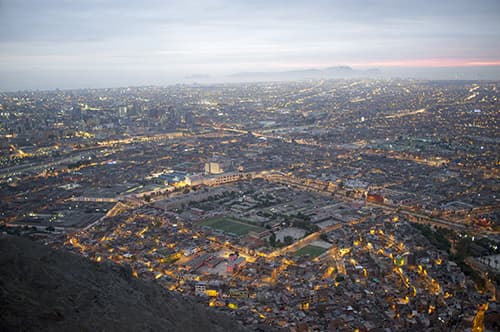 Peru today.