IT´S FREE AND WITHOUT OBLIGATION! You have nothing to lose and everything to gain! There is NEVER any obligation whatsoever and NO CREDIT CARD REQUIRED.
FULL ACCESS TO WOMEN´S PROFILES AND FEATURES! You´ll have full FREE access to all of the women´s profile information including all available photos and other enhanced features to assist you in exploring your opportunities.
START RECEIVING LETTERS FROM WOMEN! Our real, live, local Matchmakers go to work for you immediately – at NO COST - matching your profile to potential women in their city or region! Most men begin receiving letters from qualified women within a day or two – sometimes even just hours.
OPPORTUNITY TO VIEW WOMEN´S VIDEOS! You´ll have the opportunity to view the women´s profile videos (if available) produced by our local staff and found exclusively here!
YOU ARE IN CONTROL! YOU are in control. YOU choose who, how and IF you want to communicate with a woman. NEVER any obligation!
CUSTOMER SERVICE THAT IS UNMATCHED Questions? Concerns? We invite you to call us or otherwise contact us anytime! Our contact information is at the bottom of nearly every page.
Set Up Your Account Here
Is there any REAL reason to wait? It's FREE, instant and without
obligation to register NOW!
It’s the first step in possibly the most rewarding romantic adventure of your lifetime!
Be amazed of the best peruvian matchmakers who’ll work for you in finding true love and marriage.
It's the multiple layers of great civilizations which makes Peru so fascinating. You can wander around colonial
cities which have preserved the legacy of the Spanish conquistadors, visit the ancient Incan capital of Cuzco,
explore the lost city of Machu Picchu and ponder the enigma of the Nazca Lines (answers on a postcard please). You
don't have to be in Peru too long to realize that the "New World" had a rich and complex cultural life thousands
of
years before Pizarro turned up wearing funny clothing.
All of this exists in a country with some of the most spectacular and varied scenery in South America. The
Peruvian
Andes are arguably the most beautiful on the continent and the mountains are home to millions of highland Indians
who still speak the ancient tongue of Quechua and maintain a traditional way of life. The verdant Amazon Basin,
which occupies half of Peru, is one of the world's top 10 biodiversity "hot spots" - a species-rich area of
tropical
rainforest that will make your head spin when you start to learn about its ecology. And the coastal deserts, with
their huge rolling dunes, farmland oases and fishing villages, are underappreciated by travelers but offer the
opportunity to get off the Gringo Trail in a big way. But you don't have to be a zoologist, an anthropologist or a
mountain climber to enjoy Peru, all you need is a keen eye, a love of landscape, an interest in history and a very
good money belt.
Known facts about Peru
Arequipa, one of the best cities in Peru.
Amazonas - Capital city of Chachapoyas. It is close to the famed Jungle
Kuelap Ruins, Moyobamba and known for its 2,500 varieties of orchids.
Arequipa - The "White City" located in the southern highlands, 2359.152 m
(7,740 ft) above sea level on the slopes of the Misti Volcano. It is the second largest city in Peru. Crammed with
Spanish Colonial and Andalusian influences and architecture, the Santa Catalina Convent, Goyeneche Palace and the
Casa del Moral are some of its most interesting sites. Beautiful countryside in the surrounding area. The awesome
nearby Colca Canyon is twice as deep as the Grand Canyon! Visitors can make short one-day visits to the Colca, take
a week-long trek (year around) or descend the river by kayak or raft, June thru September. The latter only for
professionals! Safer rafting can also be undertaken along the nearby calm Majes River, wandering through wonderful
scenery, close to numerous archaeological sites. Apart from the Panamerican Highway, there are numerous flights
daily from/to Lima (75 mins.), Cusco (35 mins.) and Juliaca (25 mins.)
Ayacucho - The Andean "Town of Churches", which is sometimes said to have
more of them than houses ! Beautiful architecture ! A location with exquisite handicraft, including pottery,
leatherwork, textiles and jewelry. One of the most important centers of Peru's long historical background. A 45 min
daily flight from Lima.
Cajamarca - Located in the Northern Highlands it is famed for its
traditional churches, and natural hot springs, such as the "Banos del Inca" (Inca Baths). The famous "Rescue Room"
which Inca Atahualpa was forced by Conqueror Francisco Pizarro to fill with gold and silver, in an effort to save
his life (didn't work, they killed him anyway!) is also located here.
Camana - A lovely town famous for its cuisine with around 35,000
inhabitants, located on the South Pan American Highway, 830 km (515.738 mi) from Lima, just beyond Nazca and shortly
before Arequipa. Camana is situated on the coast in an agricultural valley, with a river that produces the most
delicious “camarones” (shrimp) in the country ! During summer, the 40 km (25 mi) beaches are host to large numbers
of bathers from all around, especially from Arequipa. Underwater and over water sports are most popular here. Some
activities which ensures the tourism in Peru. Closeby you will find an Archaeological Museum and “Las Bodeguillas”,
caves which were used - it is said - to hide treasures brought down from Cuzco Inca Temples.
Canete - A small easily reached sleepy town south of Lima, close to several
other similar locations in the Lunahuana valley. Ideal for rafting, down the Canete River. Accessible via the
Southern branch of the Panamerican Highway. Tasty down-to-earth cuisine !
Chimbote, one of the best cities in Peru.
Chiclayo - Is a northern coastal city with a hot and sunny climate. Chiclayo
and other towns in northern Peru are centres of witchcraft. Among the places of archaeological interest around
Chiclayo are Tucume, Batan Grande and Huaca Rajada, where a royal Moche mausoleum was found in 1987. The greatest
discovery was the tomb of the Senor de Sipan, whose funeral clothes were adorned with gold, silver and jewels.
Archaeologists have ascertained that he was a royal ruler 1600 years ago and that he was about 30 years old when he
died. However, the Senor de Sipan is still shrouded in mystery. His precise identity and cause of death remain
unknown. The priceless funeral artefacts unearthed from the tomb can be viewed at the Bruning Museum in Lambayeque,
41 km (25 mi) north of Chiclayo. There are daily flights from Lima (1 hour) and Trujillo (15 min) as well as road
access via the North Pan American Highway from Lima (780 km/485 mi).
Chimbote - A town just south of Trujillo, on the coast north of Lima. It is
the largest fishing port in Peru, where fish flour and canned fish are produced in exportable quantities. It is also
the largest steel producing center in the country.
Chincha - This small town is located 200 km (124 mi) south of Lima on the
Panamerican Highway. Like so many other towns on the barren Peruvian Coast, Chincha is located in a rich valley
producing fruit and vegetables. It is noted for being the birth spot of a very prominent Negro culture and folklore,
brought from Africa by slaves who years ago worked on the "haciendas". One of these (San Jose) is now a converted
vacation resort.
Cuzco, one of the best cities in Peru.
Cusco - Situated 3360 m (11,024 ft) above sea level, was once the capital of
the Inca Empire. Remains of the granite stone walls of the Inca Palace and temples can still be seen; which also
classified to be part of Peru culture, the most remarkable is the Koricancha, or Sun Temple. Of the several
churches, the 17th-century La Merced and its monastery San Francisco Belen de los Reyes, Santa Clara and San Blas
are the most interesting, representative as they do a blend of colonial and Indian architecture.
Overlooking Cusco is the immense fortress of Sacsayhuaman. Also easily accessible are the Inca sites of Kenko, Puca
Pucara and Tambomachay, and the markets of Pisac (Tuesdays, Thursday and Sundays) and Chincheros are also an
attraction. The Inca City of Cuzco is also the main entry point to reach the world-famed wonders of Machu Picchu,
The Sacred Valley of the Incas and the exciting Urubamba and Vilcanota River Rafting locations. Cuzco is best
reached from Lima or Arequipa by air, daily. It is also accessible from Arequipa by train.
Huacho - A small town located 148 km (91.9629 mi) north of Lima on the Pan
American Coastal Highway. It is close to the National Park of Lachay, where a microclimate caused by a localized
high degree of humidity, has created a natural area of extensive vegetation inhabited by small wildlife, right in
the middle of the barren desert hillside.
Huaraz, one of the best cities in Peru.
Huaraz - This city of roughly 75,000 inhabitants is located 3091 m (10141.08
ft) above sea level in the Callejon de Huaylas, a valley overlooked by the Andes mountain ranges of the "Cordillera
Blanca" and the "Cordillera Negra". Due to its glacial lakes and snowbound peaks the area is often referred to as
the "Peruvian Switzerland". Closeby mountain "Huascaran" is the tallest in Peru (6,800 meters). Huaraz is mostly
sunny and dry during the daytime and cold at night, with rainfalls December thru April. Mountain climbers from all
over the world relish visiting Huaraz.
Ica - Ica is easy to reach by car from Lima via the South Pan American
Highway. The regional Museum at Ica houses many objects from the primitive Peruvian cultures: mummies, war trophies,
pottery, cloth and gold ornaments. The surrounding area is renowned for its lovely vineyards. Local wines and the
famous "Pisco" brandy are produced here!
Ilo - A very busy port located in the southern region of the Country in
Moquegua. The area has two of the largest mines in South America - Cuajone and Toquepala. Ilo is the outlet for
mineral exports and also handles large volumes of incoming freight destined to both Peru and Bolivia, where it is
onforwarded by rail.
Iquitos - Iquitos is the most important town in the heart of the jungle area
of Peru. The Peruvian Amazon area is larger than Spain, France and Germany, combined! Formerly an abandoned Jesuit
mission, it began to grow in 1864 when the river post of Loreto was established. From the end of the XIX century
until early 1900, it was the centre for the rich rubber industry. Great mansions bear witness to a past splendor
which ended in 1912 with the ruin of the rubber trade. The murmur of the jungle penetrates its streets. The floating
houses of the Port of Belen, on the Amazon, are reminiscent of the river cities of Bangkok and Hong Kong. The tiles
on the outside of its buildings give the town a unique air. Iquitos is an excellent starting point for journeys into
the jungle. It can be reached from Lima daily, by air.
Juliaca - A city of around 136,000 inhabitants located approximately 3,800 m
(12467.19 ft) above sea level on the “altiplano” (andean plateau) of Qollao, relatively close to Lake Titicaca. A
cattle breeding area known for its textile and leather goods. Alpaca wool trading is extensive and typical of the
region. Closeby are the archaeological ruins of Sillustani. Juliaca is connected by train with closeby Puno, Cusco
and Arequipa. Its airport is served by daily flights from Lima, to Arequipa.
Lima, one of the best cities in Peru.
Lima - Also known as the "City of the Kings" or "Garden City" it is the
capital of Peru. A bustling metropolis with over 7 million inhabitants, located on the coast, roughly midway between
the Ecuadorian border and Chile. It was founded in 1535 in the Rimac valley by the Spanish conqueror, Francisco
Pizarro. The city is very contrasting: beautiful historical buildings with balconies, convents, churches and plazas
from the days of the Spaniards are located in the old city center, whereas modern buildings, parks, numerous
restaurants, hotels and shopping centers are located in the residential areas of Miraflores, San Isidro, Monterrico,
La Molina and others.
Lima has several splendid museums, galleries and monuments reeking with history! The summer beach season
(December-April) is ideal for bathing and surfing, right below the cliffs overlooked by Miraflores and San Isidro!
Quaint little beach towns with restaurants serving fresh seafood are spread along the 120 km (74.5645 mi) coast
south of the city. Although during the cool season (May-November), the city is mostly overcast, lots of sun and
pleasant countryside restaurants are found minutes away, just up the Rimac valley.
There are several pre-Inca cities on the outskirts of Lima, such as Cajamarquilla and Pachacamac, well worth
visiting. The city is accessible by air from the U.S.A. (several daily nonstops from Miami, New York, Dallas,
Atlanta, Houston, Los Angeles) and from practically all major European and South American Capitals. Likewise, it is
well connected by air with daily flights to/from all major Peruvian cities. It is also linked to them by well paved
highways and boasts of the highest railroad in the world, taking passengers and freight eastbound into the Andean
mountains. Electricity in Lima - and also in other towns - is 220 volts, 60 cycles.
Machu Picchu, one of the best marvels in Peru.
Machu Picchu - Though uninhabited, this historical Inca citadel is one of
the true marvels of the world !! The magnificent, breathtaking, conglomeration of stone ruins, palaces, towers,
temples, terraces, staircases and other remains, nestling in mountains, surrounded by beautiful vegetation, is an
unforgettable lifetime experience-in itself worth the journey to Peru !! Machu Picchu can be reached by railroad,
helicopter or by walking the Inca Trail. The entry point to reach Machu Picchu is Cuzco, connected to Lima by daily
flights.
Mancora - A small coastal village surrounded by an ever - increasing number
of beach resorts, it is noted for its lovely bathing shores, snorkeling, windsurfing and other sea sports. Close by
Cabo Blanco is home to the Black Marlin, Swordfish and other species; a location which was well known to Ernest
Hemingway and inspired him to write "The Old Man and The Sea". The world's most perfect and even surfing waves break
on many of these beaches. Accessible from Lima via the Tumbes and Talara Airports or by the Panamerican Highway.
Moquegua, one of the best cities in Peru.
Moquegua - A city located on the Southern Peruvian Coast, with a population
of 138,000 inhabitants. The climate is dry and warm with sunshine throughout most of the year. The town has a lovely
view of the fertile valley it overlooks. Historians report that this town was closely related to the Tiahuanaco and
Pucara cultures, belonging to the Lake Titicaca region, up in the highlands, further to the east. Moquegua is
traditionally a fruit and wine producer, although now its main activity is mineral mining. It is in a volcanic area,
close to Huaynaputina and Tixati mountains. The town has many monuments left by the Spaniards. Moquegua is famed for
its varied and tasty sweet products, wines, pisco and cognac.
Nazca - Nazca is a very small community of just over 50,000 inhabitants,
located 440 km (273 mi) south of Lima, on the Panamerican Highway. It is famed for the closeby mysterious "Nazca
Lines", an unresolved marvel, even in our modern computer age! Visible by air from small aircraft and also from
ground look-out points. These channels run along the ground in the desert over a surface area of more than five
hundred square kilometres. Some authors have imagined the Nazca drawings to be the outline of a landing ground for
extraterrestrial spaceships. Others interested in the subject maintain that the villagers in the region had, in the
far distant past, succeeded in flying through the air in balloons. Whatever the origin of these Nazca lines is, the
Incas took the secret with them when they vanished.
Paracas - Paracas is a Natural wildlife sanctuary, with an immense variety
of birds, and marine life, including sea lions, penguins, red and white flamingos and the visiting huge Andean
Condor! The bay is the location where Argentine General San Martin disembarked, to start off Peru's independence
from the Spaniards.
Pisco - Located on the coast south of Lima, Pisco originally prospered
because of its nearby vineyards. The town eventually gave its name to Peru's Brandy which was later used as the most
important ingredient of the world - famed "Pisco Sour".
Piura - This is the main city on the Northern coast of the country. It can
be reached daily by air. It is renowned for its well woven straw hats and other handicraft, including artisan
silverware. It is close to Paita - the main northern city port and only a very short distance from the Chira Valley,
one of the largest and most productive agricultural areas in Peru.
Puerto Maldonado - A jungle port close to the bolivian border at the
junction of the Tambopata and Madre de Dios rivers. A producer of lumber, rice, yuca, sugar cane and tropical
fruits.
Puno, one of the best cities in Peru.
Puno - Puno is the capital of the province with the same name, has a
population of about 80,000. It itself is a small dusty town. Its claim to fame is its location. It is located on the
shores of Lake Titicaca, at an altitude of 12,421 feet. It is highly recommended you take it easy for a few days to
get used to the altitude. The altitude also makes for the extremes in the climate in Puno. During daytime it can be
very hot ( be very liberal with sun block), but at night the temperature can drop below the freezing point. The city
itself may not be very interesting for travellers, but the surroundings are magnificent. It and the area around it
are the cradle of the Aymara civilization and the legendary birthplace of the founders of the Inca empire.
Puno lies on the shore of Lake Titicaca, the world's highest navigable lake, from whose waters the Inca believed
Manco Capac, their cultural founder, emerged. Many ethnic groups like the Uros still depend on the the lake for
their living. The Uros dwell on the floating islands they build with the lake's reed vegetation. Near Puno,
overlooking Lake Umayo, are chullpas, or burial towers, that served as the tombs of the Aymara Lords. Tours can be
readily put together upon arrival at a very reasonable price by your hotel.
Tacna - Tacna is located in the far south only 35 km (22 mi) from the border
with Chile. Tacna has a population of about 170,000. The city lies in the Atacama desert near the Pacific Ocean and
in summer it can get very hot. Again, don't spare the sun screen. Fortunately there's lots of shade especially in
the downtown area with the palm-tree promenade and Plaza de Armas. Tacna is part of a duty free zone that is
associated with Arica Chile. Consequently it has one of the biggest artifact markets around. In this case Japanese
and Korean artifacts like color TV's, vcrs but the prices really are pretty good. There are also a lot of shops with
traditional Peruvian handicrafts. It has daily flights to and from Lima and other major Peruvian cities.
Talara - Center of the largest coastal oil fields in Peru, just north of the
Chira Valley, one of the most fertile, cotton, rice, mango, banana and produce production areas on the Peruvian
coast.
Tarapoto - With a population of approximately 70,000 inhabitants, this town
is located close to the famed “Pongo de Aguirre”, gorge where the Huallaga river roars through the Oriental Andes
mountain range. It is in the region where the mountain area joins with the high jungle. Tarapoto is connected by air
to Lima and several regional cities, such as Iquitos and Yurimaguas.
Tarma - An enchanting little town located approximately 3,000 m (9842.52 ft)
above sea level in a valley full of Eucalyptus, wheat, Barley and corn fields. It is a relatively short distance
from La Oroya (mining town) and 114 km. North of Huancayo. Another city with a nickname of its own : "Pearl of The
Andes", it has some closeby Inca and Pre-Inca ruins. The road beyond Tarma descends rapidly into the rich (coffee
and fruit producing) Chanchamayo Valley.
Tingo Maria - A small town between Huancayo and Pucallpa which sprung up and
grew when the road connecting these two locations was built. In fact, the town's main street is actually the road
itself (Good old western style!). The most renowned local attraction is the Owl's Cave (Cueva de las Lechuzas), a
few miles northeast of town, on the road to Pucallpa. The cave is full of beautiful stalagmites and stalactites with
many, many nearly extinct nightbirds.
Trujillo, one of the best cities in Peru.
Trujillo - The colonial city of Trujillo is very close to the ruins of
Chan-Chan. This was the one of the largest sun-dried brick cities in the world. Its remains still bear witness to a
rich culture which died out before the arrival of the Incas over 500 years ago. Trujillo is situated in the fertile
valley of Santa Catalina in an oasis bathed by the waters of the river Moche.
It has some magnificent mansions and many baroque churches belonging to the Spanish period. A city of balconies and
iron grilles, it is pleasant and hospitable. It can be reached from Lima daily by air, or by car via the Panamerican
Highway.
Tumbes - The northernmost city of Peru, situated on the Tumbes River, just
off the coast, a few miles south of the border with Ecuador. It is sunny throughout most of the year with a 24° C
average temperature and a short rainy season, January thru March. Population is just under 200,000 inhabitants. The
area surrounding the Tumbes River estuary is considered one of the most renowned Mangrove areas on the South
American continent.
Tumbes - The northernmost city of Peru, situated on the Tumbes River, just
off the coast, a few miles south of the border with Ecuador. It is sunny throughout most of the year with a 24° C
average temperature and a short rainy season, January thru March. Population is just under 200,000 inhabitants. The
area surrounding the Tumbes River estuary is considered one of the most renowned Mangrove areas on the South
American continent.
Many shrimp farms are located in the general area. Several small tourist resorts are located on the coast just
south of Tumbes with beautiful white sandy bathing beaches, windsurfing and deep sea fishing. The area is famed for
its fresh tasty fish, shrimp, lobsters, oysters, etc. It can be reached from Lima on daily 1:30 hour flights or by
the well-paved Pan American Highway.

 Be amazed of the best peruvian matchmakers who’ll work for you in finding true love and marriage.
 Arequipa, one of the best cities in Peru.
 Chimbote, one of the best cities in Peru.
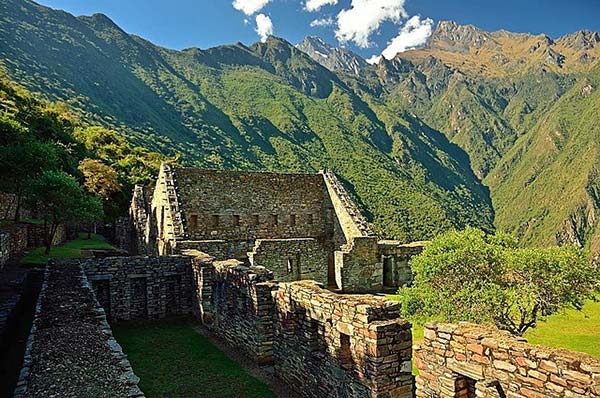 Cuzco, one of the best cities in Peru.
 Huaraz, one of the best cities in Peru.
 Lima, one of the best cities in Peru.
 Machu Picchu, one of the best marvels in Peru.
 Moquegua, one of the best cities in Peru.
 Puno, one of the best cities in Peru.
 Trujillo, one of the best cities in Peru.